




Where to Customize Printed Non Woven Bags? How much?
What Are Printed Non Woven Bags?
Non-woven bags (also known as nonwoven fabric bags) are eco-friendly products made primarily from polypropylene. They boast properties such as moisture resistance, air permeability, flexibility, light weight, non-flammability, easy degradability, non-toxicity, and non-irritation.
Compared with traditional plastic bags, non-woven bags are tougher, more durable, and aesthetically pleasing. Reusable and washable, they feature bright, vivid printed patterns, making them a cost-effective and environmentally friendly choice. These bags decompose far more rapidly in natural environments than conventional plastic bags—breaking down naturally within 90 days when left outdoors, whereas plastic bags can take hundreds of years to degrade.
Non-woven bags are widely used across sectors including shopping, packaging, advertising, electronics, apparel, and decoration. Particularly popular as promotional gifts, exhibition document bags, and corporate branding merchandise, they have become ubiquitous in modern commercial activities and daily life.
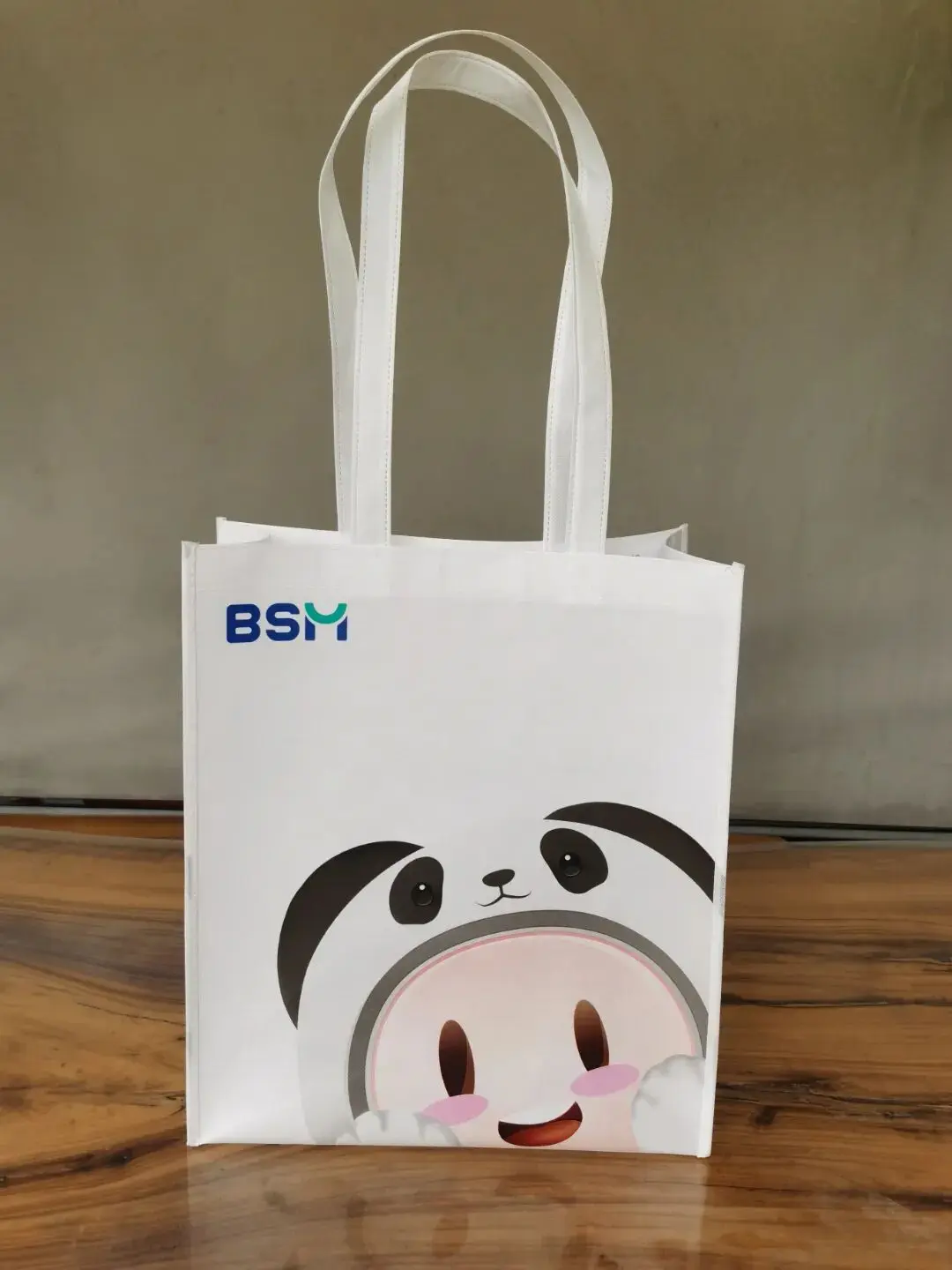
Common Materials & Processes for Printed Non Woven Bags
1. Main Material Types
Non-woven bags can be crafted from a variety of materials, each with unique characteristics:
① Spunbond Non-Woven Fabric: The most commonly used material, offering low cost and high strength. It is the preferred choice for shopping bags, typically available in 80g and 90g weights.
② Spunlace Non-Woven Fabric: Produced by entangling fibers with high-pressure micro water jets, delivering a soft hand feel.
③ Needle-Punched Non-Woven Fabric: Formed by reinforcing fluffy fiber webs into fabric via needle piercing, resulting in a dense structure.
④ Laminated Non-Woven Fabric: Enhanced with a lamination process to increase thickness, water resistance, load-bearing capacity, and durability.
In addition to non-woven fabrics, materials like cotton cloth, canvas, and oxford cloth are also used for eco-friendly bags, with varying price points and properties.
Table: Comparison of Main Non-Woven Fabric Materials
Material Type | Characteristics | Application Scenarios | Cost Comparison |
Spunbond Non-Woven Fabric | Low cost, high strength, most widely used | Supermarket shopping bags, promotional advertising bags | Cost-effective |
Laminated Non-Woven Fabric | Excellent water resistance, strong load-bearing capacity | Waterproof required occasions | Medium to high |
Needle-Punched Non-Woven Fabric | Dense structure, moderate thickness | Packaging requiring high durability | Medium |
Spunlace Non-Woven Fabric | Soft hand feel, good air permeability | High-end gift packaging | High |
2. Printing Process Options
A range of printing processes are available for non-woven bags, with the optimal solution selected based on design requirements:
① Screen Printing: Ink is transferred onto non-woven fabric through a mesh screen using a squeegee. The printed patterns have a certain thickness, strong three-dimensionality, and bright colors, making them ideal for outdoor advertising. The ink is waterproof and washable multiple times. This process features low cost, making it a cost-effective option.
② Gravure Laminated Printing: First, graphics and text are printed on film using traditional gravure printing technology, then the film is laminated onto non-woven fabric. Suitable for large-area color pattern printing, it produces full, stylish images with excellent water resistance and high durability. The drawback is that the film is difficult to degrade, resulting in slightly lower environmental friendliness.
③ Heat Transfer Printing: Graphics and text are first printed on heat transfer film or paper, then transferred onto non-woven fabric through heating. It can print complex gradient colors with vivid hues, making it suitable for intricate patterns such as photographs.
Regular Sizes & Application Scenarios of Printed Non-Woven Bags
Non-woven bags do not have absolutely fixed sizes and can be customized according to needs, but some common specifications have emerged in the market:
① Standard Size: 30cm (width) × 40cm (height) × 10cm (side gusset) – the most commonly used specification
② A3 Document Bag: 32cm × 43cm × 10cm – suitable for holding documents and materials
③ Supermarket Shopping Bag: 48cm × 35cm × 10cm, with 50cm long × 2.5cm wide hand straps
④ Simple Type: 30cm × 40cm (no bottom gusset or side gusset)
⑤ Horizontal Type: 40cm × 30cm × 10cm
When choosing the appropriate size, the application scenario should be considered: supermarket shopping bags require large capacity to hold goods, exhibition document bags need to easily accommodate A4 or A3 documents, while clothing bags may need more space.
Customization Process of Printed Non-Woven Bags
The process of customizing printed non-woven bags typically includes the following steps:
1. Provide Customization Requirements: The customer sends a detailed customization request document, including size, color, LOGO, quantity, and other specifics. The document should be as detailed as possible, preferably including design drafts or sketches.
2. Manufacturer Provides Quotation: The manufacturer calculates the cost based on the customer's requirements and issues a detailed quotation. The price is affected by factors such as size, quantity, and the complexity of the printing process.
3. Customer Confirmation & Payment: The customer confirms the quotation and makes the payment.
4. Arrange Production: Upon receiving payment, the manufacturer starts production, which includes design, material selection, printing, cutting, sewing, and packaging. Generally, bags are bundled in groups of 50, and packed in large sacks of 500–1000 pieces.
5. Delivery & Shipment: After production is completed, the goods are shipped via logistics or courier services (e.g., DHL, UPS, FedEx). Freight can be collected upon delivery, and logistics companies usually do not offer door-to-door delivery, but will notify the recipient to pick up the goods.
Table: Customization Lead Time Reference
Customization Quantity | Estimated Production Lead Time | Remarks |
3,000–5,000 pieces | 13–15 days | Regular batch |
5,000–20,000 pieces | 14–16 days | Large batch |
30,000–100,000 pieces | 18–23 days | Extra-large batch |
Manufacturer of Printed Non-Woven Bags: LIJIE Factory, China
Among numerous non-woven bag manufacturers, LIJIE Factory in China stands out with its professional capabilities and scale advantages, becoming a leading enterprise in the industry.
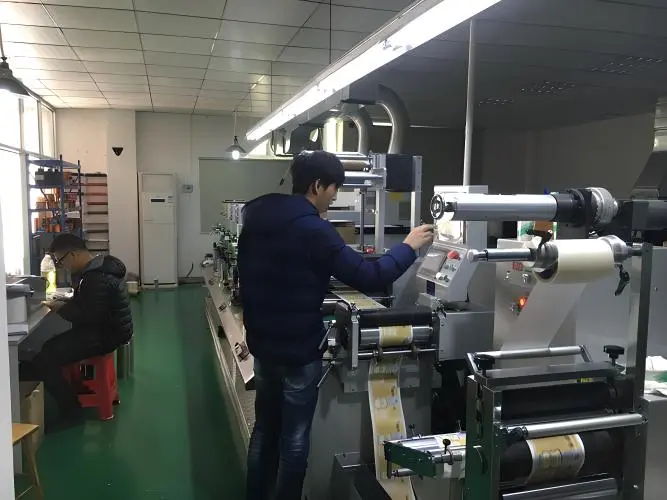
LIJIE Factory boasts a 4,000-square-meter modern production base, with a daily output of up to 30,000 printed non-woven bags, and has provided high-quality products and services to over 2,000 customers. Equipped with 30 sets of advanced processing equipment, the factory implements an integrated production process from design, material selection, cutting, printing to sewing.
Quality is the core pursuit of LIJIE Factory. The factory has obtained international certifications such as SGS, ROHS, and CE, ensuring that products meet environmental and quality standards. These certifications provide reliable guarantees, especially for sensitive fields such as food contact applications and children's products.
In terms of pricing, leveraging the advantages of large-scale production, LIJIE Factory offers highly competitive quotes: the minimum order quantity for printed non-woven bags is 3,000 pieces, with a unit price of only  0.78 (varying according to specifications and processes). This pricing strategy enables small and medium-sized enterprises to obtain high-quality customized products at a reasonable cost.