






Custom Printed Food Packaging Bags
What Are Food Packaging Bags?
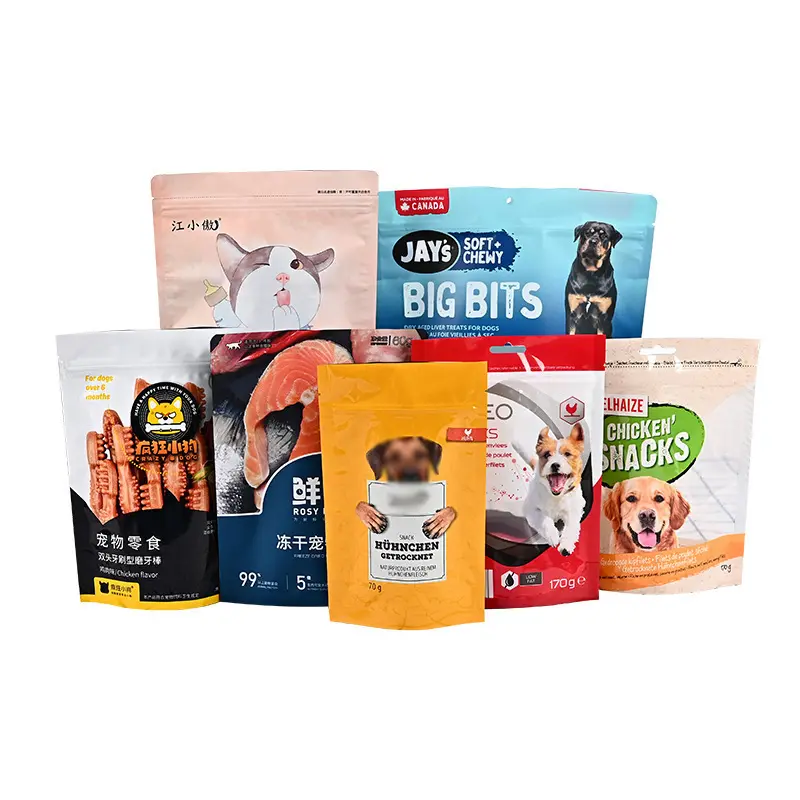
Food packaging bags are film containers that come into direct contact with food, serving to contain and protect it. They play a crucial role in food preservation, storage, transportation, and marketing. Not only can they effectively prevent food from moisture and oxidation, extend its shelf life, but also enhance brand image and market competitiveness through exquisite printed designs. Modern food packaging bags usually adopt multi-layer composite materials to meet the requirements of different foods for barrier properties, temperature resistance, sealing performance, and mechanical strength.
Customizable Materials for Food Packaging Bags
The choice of materials for food packaging bags directly affects their performance and applicability. Here are several commonly used materials:
(1) PE (Polyethylene)
It has good moisture resistance and heat-sealing properties, is soft and tear-resistant, and is often used for frozen food packaging and shopping bags. HDPE (High-Density Polyethylene) is high-temperature resistant, suitable for packaging requiring boiling water treatment. LDPE (Low-Density Polyethylene) is softer, commonly used for cling film.
(2) PP (Polypropylene)
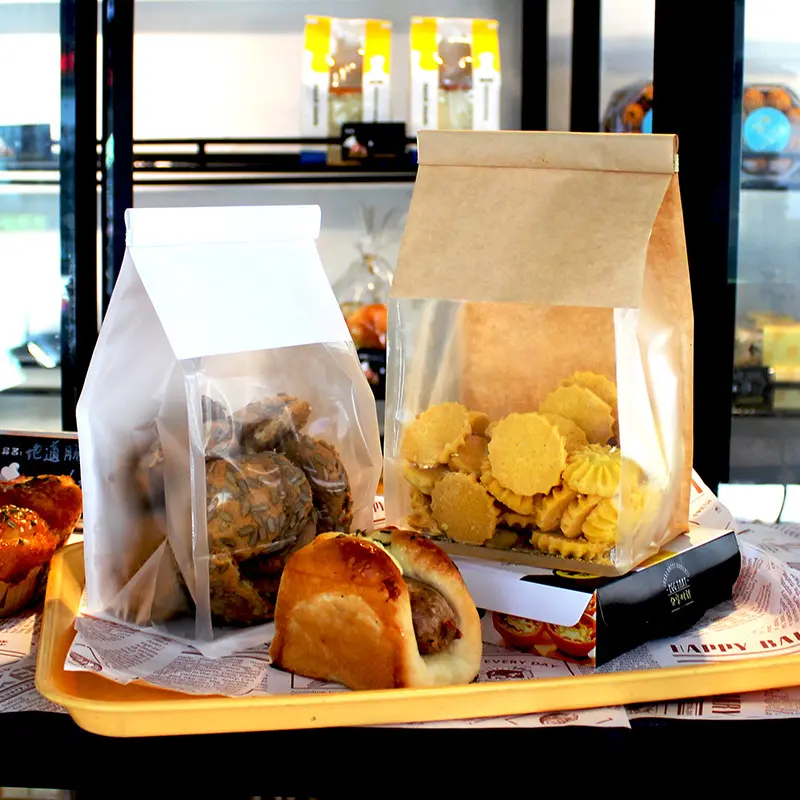
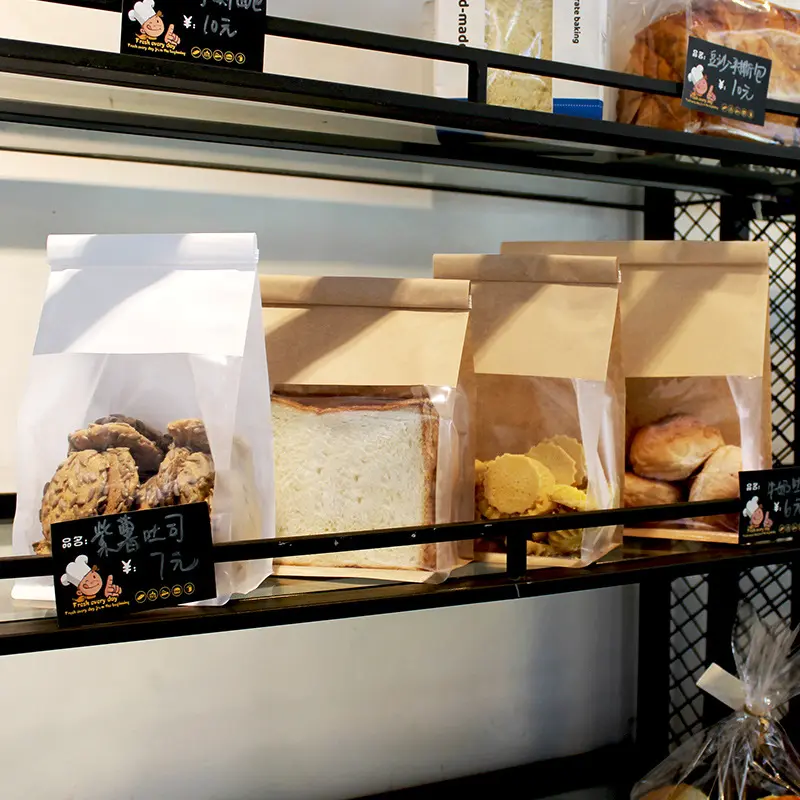
It features high transparency, higher hardness than PE, and good high-temperature resistance, making it ideal for bread bags and ready-to-eat food packaging. CPP (Cast Polypropylene) also has excellent heat-sealing performance.
(3) PET (Polyethylene Terephthalate)
With good transparency, high strength, and excellent printability, it is usually used as the outer packaging layer to enhance the appearance texture.
(4) PA (Nylon)
It is puncture-resistant, oil-resistant, and high-temperature resistant, suitable for packaging meat products and retort food.
(5) Aluminum Foil & Aluminum-Plated Film
It provides extremely high barrier properties (lightproof, oxygen-proof, moisture-proof), applicable for high-temperature retort packaging, frozen packaging, or products sensitive to light (e.g., coffee, cooked food).
(6) Special Barrier Materials
Such as EVOH (Ethylene Vinyl Alcohol Copolymer) and PVDC (Polyvinylidene Chloride), which have excellent gas barrier properties, are used to extend the shelf life of oxidation-prone foods.
In actual production, most food packaging bags adopt composite structures, such as PET/AL/PE (the outer layer as the printing layer, the middle layer as the aluminum foil barrier layer, and the inner layer as the heat-sealing layer), to balance printability, barrier properties, and sealing performance.
Main Types of Packaging Bags
Food packaging bags can be divided into various types according to shape, process, and function to meet the needs of different products:
(1) By Shape
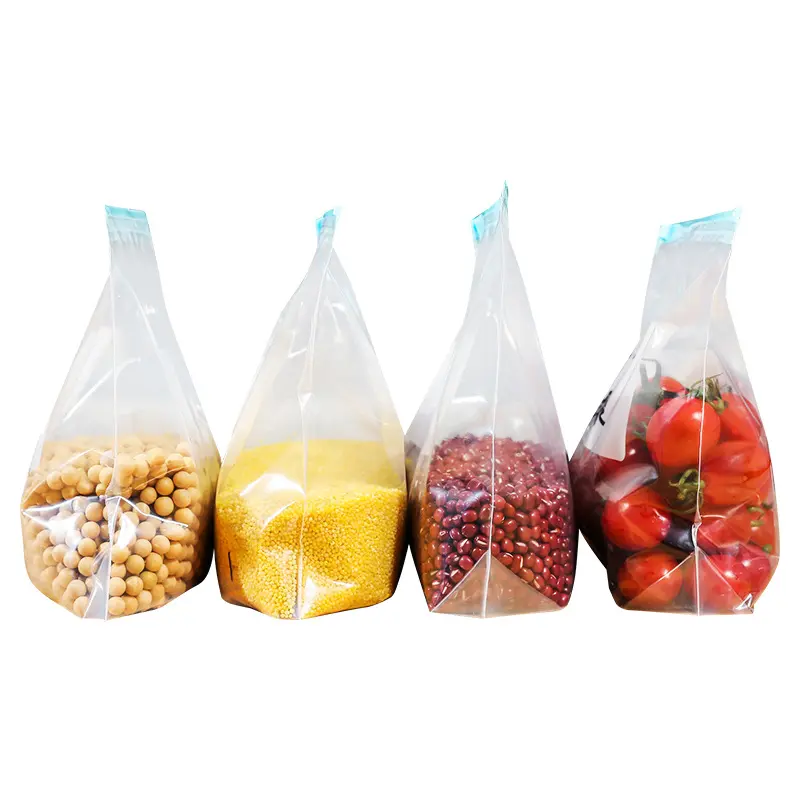
Including three-side sealed bags, stand-up pouches, zipper bags, eight-side sealed bags, back-sealed bags, and roll films (for automatic packaging machines). Three-dimensional bags and special-shaped bags are more eye-catching to consumers.
(2) By Function
① Vacuum packaging bags: Reduce oxygen by vacuum pumping to delay food spoilage, commonly used for meat products.
② Retort packaging bags: Can withstand high-temperature sterilization (e.g., 121℃ retorting), suitable for sauces, cooked food, etc.
③ Anti-static packaging bags: Used for food packaging supporting electronic components.
④ Composite woven bags: Mostly used for transportation packaging of bulk food raw materials (e.g., grains, sugar).
(3) By Material Structure
Such as paper-plastic composite bags, aluminum-plastic composite bags, etc., which combine the advantages of different materials to achieve multi-functional protection.
Scope of Applicable Products
Custom printed food packaging bags are widely used in various types of food:
① Snacks & Confectionery: Biscuits, nuts, potato chips, chocolate, candies, etc., mostly use oil-resistant and well-sealed materials.
② Cooked Food & Meat Products: Ham, cured meat, roasted meat, etc., require oxygen-proof, lightproof, and retortable packaging (e.g., aluminum foil bags).
③ Frozen Food: Dumplings, ice cream, etc., require low-temperature resistant and rupture-proof materials (e.g., PE bags).
④ Liquid & High-Oil Food: Seasoning sauces, edible oil, etc., need puncture-resistant and leak-proof composite structures.
⑤ Dried Food & Grains: Flour, rice, coffee, etc., commonly use moisture-proof and gas-barrier aluminum-plated films or composite films.
Custom Printing Process
The professional customization process ensures that packaging bags meet both food safety standards and brand requirements:
(1) Needs Communication
Customers provide product customization requirement documents, or send 2 samples to our factory for 1:1 replication production. Clarify product characteristics (e.g., food type, storage conditions), packaging size, material requirements, printing content, and budget.
(2) Material Selection
Recommend suitable materials and structures according to food characteristics (e.g., whether moisture-proof, lightproof, or retortable is needed). For example, PA/CPP structure can be adopted for high-temperature retort food, and PET/PE structure for dried food.
(3) Sample Confirmation
If sampling is required, customers shall inform us. The sampling fee is $35 per product type.
(4) Mass Production
Adopt gravure printing (durable patterns, bright colors) or flexographic printing (environmental-friendly) technologies, and conduct mass production through processes such as compounding, curing, and bag making.
(5) Quality Inspection & Delivery
Conduct random inspection on finished products, test indicators such as seal strength, pressure resistance, and solvent residue, and deliver on time after passing the inspection.
Advantages of Choosing LIJIE for Custom Printed Food Packaging Bags
As a professional manufacturer of food packaging bags, LIJIE Packaging provides one-stop solutions for customers with high-quality, low-price, and cost-effective services. Our advantages are reflected in:
(1) Production Capacity & Scale Assurance
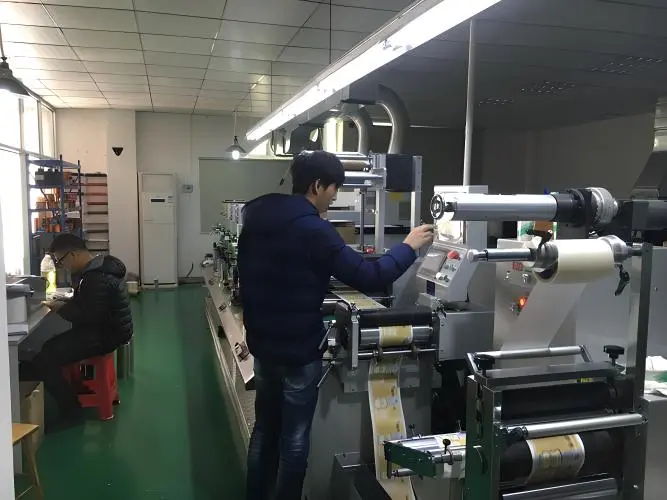
We have a 4,000㎡ modern factory and 15 sets of advanced processing equipment, with a daily output of up to 1.2 million pieces, ensuring fast delivery of large-batch orders.
(2) Quality & Compliance
We have obtained ISO quality management system certification, SGS certification, CE certification, etc., ensuring that products are odorless, free of harmful substances, and meet food hygiene requirements.
(3) Rich Industry Experience
We have served more than 1,000 customers covering snacks, cooked food, frozen food, and other fields, and can provide targeted material recommendations and structural design.
(4) High Cost-Effectiveness & Flexible Customization
We control costs through large-scale production and refined management, providing competitive prices. We support a minimum order quantity of 3,000 pieces, catering to the needs of small and medium-sized enterprises. We can customize colors, sizes, and logos according to customer requirements, and provide various printing options such as 8-color gravure printing.
(5) Full-Process Service Support
A professional team provides full tracking from design consultation, sampling to after-sales service, ensuring seamless connection.
Food packaging bags are not only containers for protecting food but also important media for brand communication. Choosing suitable materials and types and conducting professional customization can effectively enhance the market competitiveness of products.